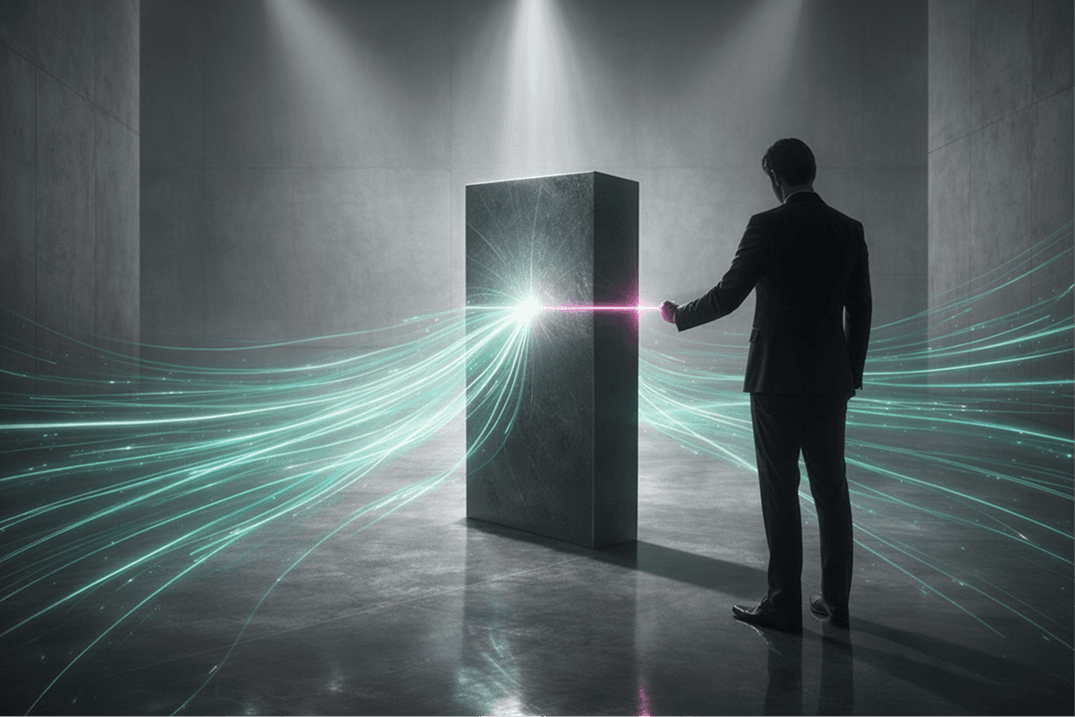
Protecting your unique human edge
Five Human Advantages AI Cannot Replace


The hardest problem with AI has nothing to do with AI.
The debate about artificial intelligence has spent years in the wrong room. Engineers argued about capability. Economists argued about jobs. Policy makers argued about regulation. Meanwhile the real question was building in the background, inside every person who opened an AI tool for the first time and felt something shift.
Not fear exactly. Something harder to name.
My research on how knowledge workers adapt to AI keeps returning me to the same observation. The organizations struggling most are not the ones that moved too slowly on technology. They are the ones that moved fast on AI and slow on the question underneath it. What does human contribution actually mean now?
Most senior leaders I speak with feel this before they can name it. The discomfort is not about capability gaps or change management. It is about something more fundamental. The professional identity that took decades to build was constructed around qualities that AI now performs adequately. And this adequacy alone is enough to make us question what remains uniquely ours.
That question deserves a serious answer.
The clarification no one asked for
What AI is doing, whether we designed it this way or not, is a forced clarification. It is separating the qualities that were human (because we were the only ones who could perform them at the time) from the qualities that are human in a deeper sense. Irreducibly, stubbornly, consequentially human.
The first category is being automated. The second is the only thing left standing.
Five qualities survive this clarification. Not because they are soft or unmeasurable. Because each one requires something AI structurally cannot provide: a continuous self with stakes in the outcome, scar tissue, genuine presence, the capacity to be wrong in a way that costs you something and changes you because of it.
Critical thinking in its real form is not analysis. It is the refusal to accept a confident-looking answer when something feels wrong and you cannot yet articulate why. AI produces authority. The human in the room is the one who interrogates it. I keep seeing organizations where nobody is doing that anymore, and the outputs look right until they don't.
Creativity is not generative AI doing the work. Any leader who has watched their team use AI for six months knows the difference between what comes out of the tool and what comes from a person who has been wrong enough times to know which angle nobody is looking from. AI has no scar tissue. It has data. The distinction matters more as the outputs get better, not less.
Relational intelligence requires presence, history, and the capacity for repair. Not the appearance of empathy. The actual weight of having been in the room when something broke, having stayed, and carrying what that cost into the next conversation. I have not found a way to simulate that and I do not think the technology gap is the reason. The person who shows up with genuine stakes in the outcome is offering something that was always rare. It is becoming rarer faster than most people realize, precisely because everything around it is being automated and the contrast is starting to show.
Ethical decisioning is judgment under genuine uncertainty by someone who lives with the consequences. AI can optimize. It cannot be accountable in any way that changes its future behavior. The human who makes the call and owns it is not being replaced. They are becoming the last person in the room.
Initiative and drive are what produce everything genuinely new. The erosion here is the one I find hardest to measure. AI removes friction. Lower friction means lower-quality ideas pass the threshold for action. The impulse that requires real investment and real risk competes with a hundred cheaper substitutes. I wonder sometimes how many people have already stopped noticing the difference.
The loop your organization is probably missing
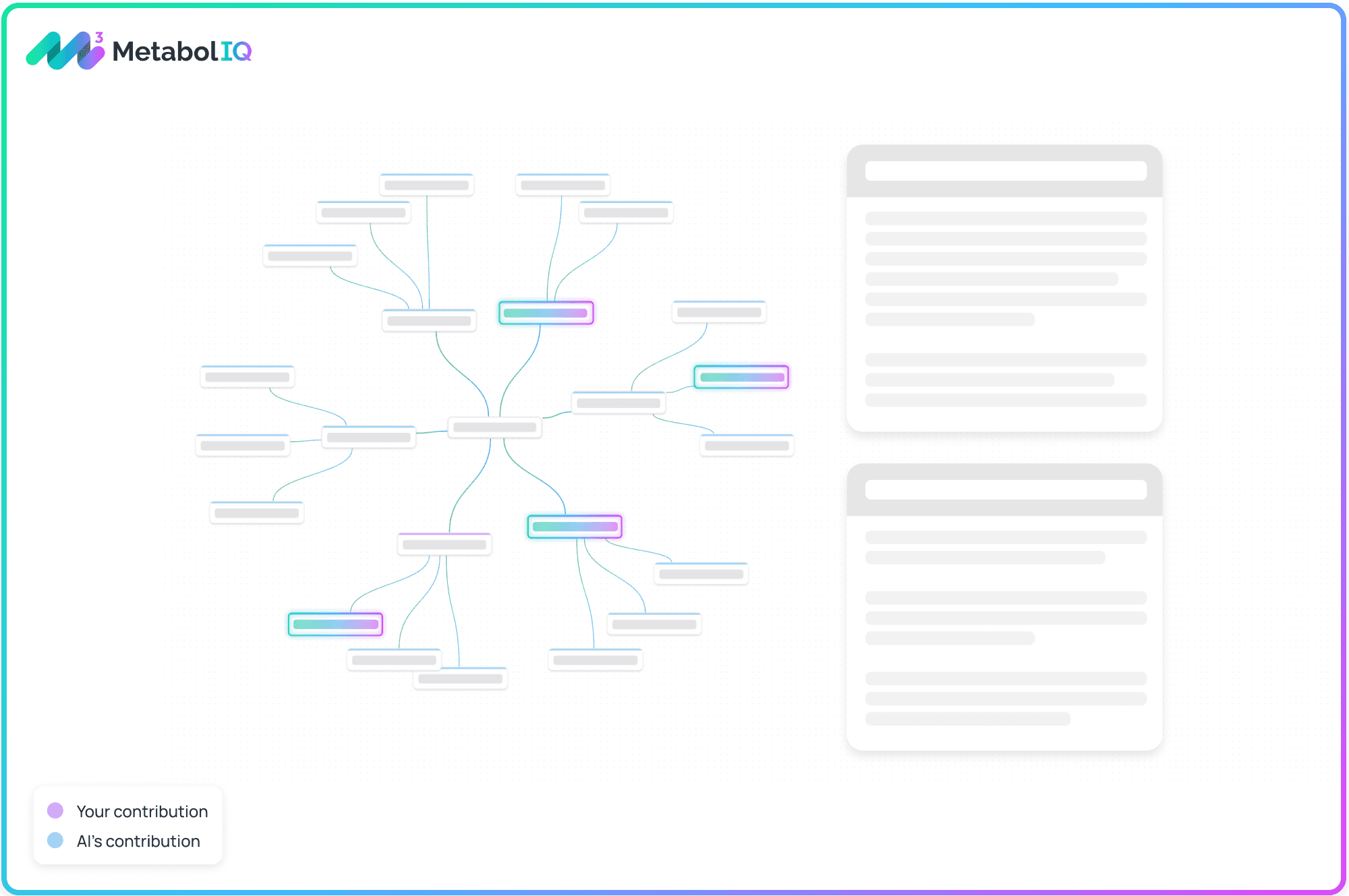
What I keep seeing in the organizations getting this right is that they are not treating human and AI as separate tracks that occasionally intersect. They have built a loop.
Human judgment goes in. AI engages with it, extends it, stress-tests it, generates what the human could not reach alone. What comes back is not an answer. It is raw material that requires the human to do something harder than they did before. Adaptive reasoning in conditions the AI could not fully anticipate. Problem reframing when the output reveals a better question than the one that was asked. Shared integrity across the coupled system. Amplified agency that belongs to the human because they steered it.
That loop is what I call cognitive synergy. The genuine amplification of human judgment rather than its replacement.
Most enterprise AI deployments are not building that loop. They are building a shortcut. The shortcut produces faster outputs and slower humans. That trade feels efficient for twelve to eighteen months. After that it shows up in the talent review, in the client relationship, in the strategic decision that nobody in the room had the judgment to push back on.
The question worth asking now
Not what AI can do. Not how fast to deploy it. But, what are you doing with the cognitive space it is opening up?
The professionals navigating this well are not the ones with the best tools. They are the ones who know which qualities they are responsible for developing, protecting them deliberately, and using AI to extend their reach rather than replace their thinking.
The hardest problem with AI has nothing to do with AI, and everything to do with protecting our human edge.
MetabolIQ AI is built on the belief that cognitive synergy, the genuine amplification of human judgment by AI, is the only enterprise AI strategy that compounds over time. We built the engine to make it real.