The $632B Question No One Can Answer
The Missing 80%: Why Enterprise AI Fails to Capture Expert Judgment


Something keeps showing up in every enterprise AI conversation I am part of right now. The tools are working. Adoption is happening. And yet when leadership asks what the organization actually got from its AI investment, the room goes quiet. That silence is not a communication problem. It is a structural one. I have had this exact conversation with more than a dozen enterprise AI leaders in the past year.
Marcus Head of AI Transformation is in the room right now
Eighteen months ago Marcus stood in front of his executive committee with a clear thesis. AI would reduce operational costs, accelerate decisions, give the firm a measurable edge. The board approved. He became Head of AI Transformation, a title that felt like momentum at the time. Today the CFO has one question:
What exactly did we get from this investment?
Marcus opens his deck. Adoption rates, seat counts, task completion metrics, time saved per workflow. A lot of numbers. What he does not have is a clear answer. And honestly, most of the leaders I talk to are in the same position.
The first one: Tacit knowledge was never captured. Not before AI. Not after
Enterprise AI sees roughly 20% of what an organization actually knows. Documents, data, structured records. The other 80% lives in people's heads. The decision logic, the exception handling, the pattern recognition built over years of doing the actual work.
That knowledge was never written down because it was never meant to be. It transferred through proximity, through watching how senior people handled difficult moments, through years of getting it wrong before getting it right. It never made it into any system. When a VP approves an exception the reasoning lives in internal meetings and informal conversations and then it’s gone. When a senior analyst reads a situation and adjusts, the logic behind that adjustment stays in the room. It just happens, and then it disappears.
When Marcus's best analyst left six months into the deployment, her judgment left with her. Replacing her cost close to 200% of her salary. The expertise she carried was never on the invoice and it was not in the knowledge base either. His AI did exactly what it was built to do. It just never had access to what actually mattered.
The second one is harder to see and I think it is actually more dangerous
Nobody is really talking about this yet. A VP in one of these organizations presented an AI-generated strategy document in a leadership meeting. Fast, polished, comprehensive. The CEO asked one probing question about a core assumption. The VP could not answer it. She had prepared the presentation without interrogating the output. The document looked like her thinking. It was not.
When people stop exercising their judgment, because the AI is faster, because the output looks credible, because there is always pressure to move, something starts to erode. The reasoning that took years to build atrophies without anyone noticing it’s happening.
The question that should have come before the budget
How to capture how your experts think before you ask AI to scale it. 92% of executives are increasing AI investment over the next three years. Almost none of them have a system for capturing what their experts actually know. The judgment that made these firms valuable is walking out the door. Through retirements, departures, and deference to outputs nobody truly interrogates.
What I see in the organizations getting this right is different. Cognitive synergy. Human judgment and AI execution working together so the output is better than either could produce alone and the human stays sharp in the process. What I see in the organizations getting it wrong is humans ratifying outputs they do not fully understand. The steering wheel is missing. And the longer it stays missing the harder it becomes to rebuild.
That is not a tool problem. It is a different layer entirely.
Now, when Marcus is back in that room, the CFO gets an answer.
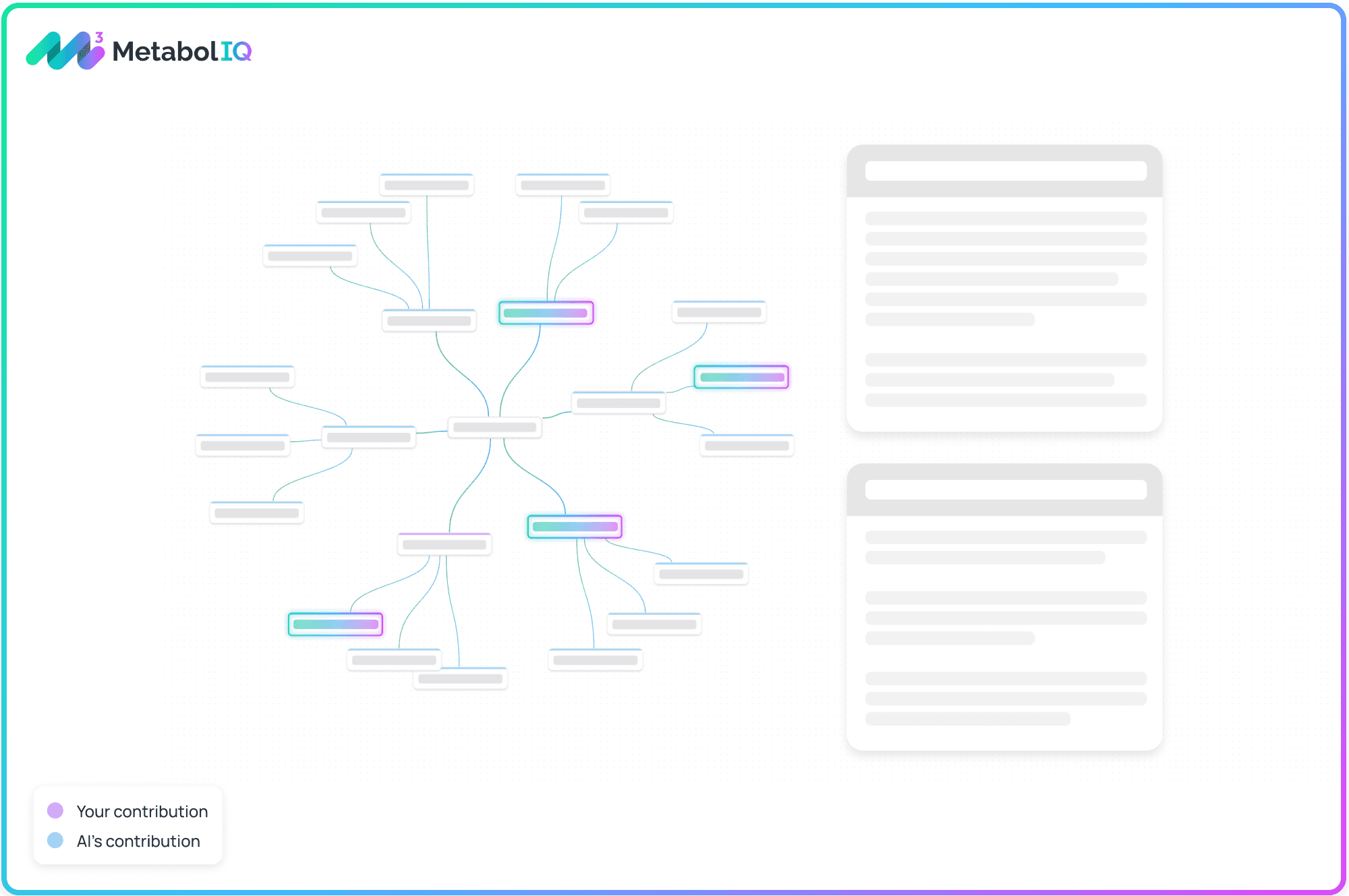
MetabolIQ is the Enterprise AI engine that elevates and translates how experts think into AI that works. We don't build agents. We influence everything they do.